you’re allowed to know how it’s made.
most distilleries keep their process vague. we don’t. every decision —from fermentation to distillation cuts— is intentional, and we’re open about all of it. because each batch is an experiment, the exact process can change. so if you want the full breakdown for a specific rum, you’ll find it under “our rums”.

raw ingredients
until it becomes sustainable to grow vast amounts of sugar cane in california, we use molasses for our batches. the molasses that we source is unsulfured and baking-grade. i can’t emphasize enough how important it is for distillers to use unsulfured molasses. sulfur is used to prevent spoilage, however, fermentation can almost be thought of as a controlled form of spoilage. sulfur will inhibit yeast growth, thereby preventing, or at best limiting, fermentation. keep this in mind when making rum. also, we firmly believe that baking-grade molasses produces better tasting rums than blackstrap molasses or a combination of crystalline sugar and molasses, which is why we use it. yes, there are other grades of molasses, but these are the two most common types that are commercially available.

fermentation
during fermentation, yeast convert the sugars in the raw ingredients into ethanol. at a microscopic and chemical level, fermentation is not as straight forward as sugar + yeast = ethanol. a lot of additional flavor and aroma compounds are also produced. this is especially true for longer fermentation times (which ours are) and fermentations that include bacteria (ex: spontaneous fermentation). yeast strain is one variable we’re able to play around with between batches that results in rums with vastly different flavors. for more info about what yeast strain we used for a specific batch, check out “our rum”. oh, and if you’re curious about what we use for our fermenters, we ferment each batch in 264 gallon/1000 liter totes.
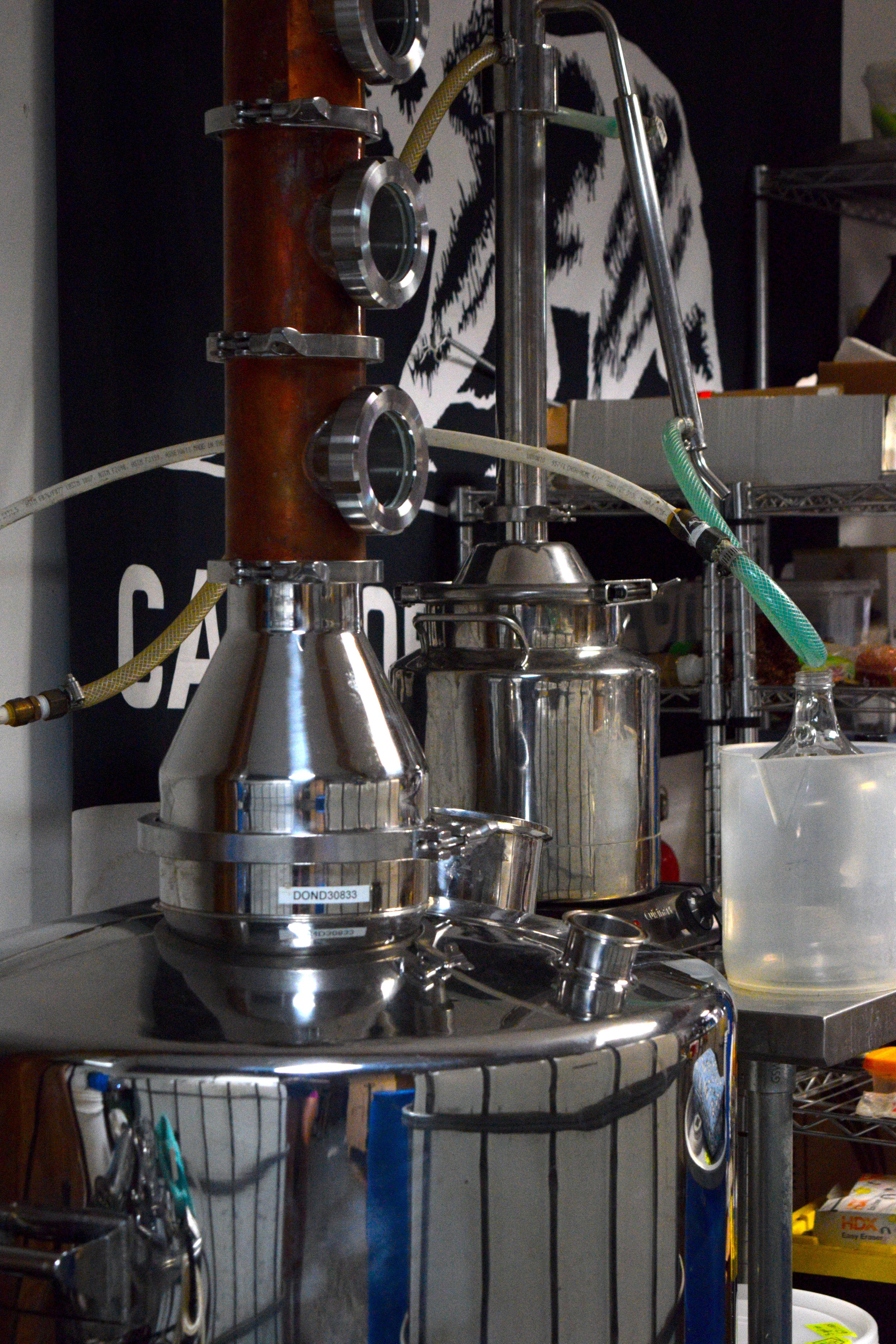
distillation
each batch is distilled using a 55-gallon mile-hi distilling pot still (i’ve named it moira) that is easily modified, which makes us very excited for future projects. however, the way we have the still set up for our current batches is as a classic pot still. the neck of the still is about the same height as the pot and even though you see sight glasses in the neck, there aren’t any plates installed in those segments. it is just a pot still. the lyne arm is very slightly angled upwards, which increases reflux a touch. that feeds into a shell and tube condenser that’s cooled with room temperature water. the kettle is heated electrically and i tend to run it low and slow. each distillation takes about 5 hours.

dunder
dunder is the liquid that’s left over in the still after a stripping run. it’s also known as stillage or backset. it doesn’t contain any alcohol but it’s filled with minerals, long chain fatty acids, microbial biomass, and polyphenols. it can be recycled into the next fermentation batches, where it provides nutrients for the yeast and slightly decreases the pH of the fermentation. from what we’ve observed, this increases ester production while decreasing amyl alcohol production. i like to think of it as adding complexity to the rum’s flavor profile. it’s one variable we play around with, so we save the dunder after every stripping run. all the dunder gets blended into our dunder pit (which is not actually a pit in the ground, it’s just a 1000 liter tote). after only a few days of sitting, our dunder grows this really cool pellicle layer on top!

bottling
the rums are completely unaged (for right now at least) and bottled without any additives. seriously, the only thing we’ll ever add is water. each batch is available at distillation strength as well as a lower proof. for the lower proof expressions, as i mentioned, we just add water. the water we use comes from our reverse osmosis filter. everything is bottled and labeled by hand.